Learn · Water
Water Treatment Methods & Recommended Emergency Water Kits
Discover ten emergency water treatment methods, compare their advantages and limitations, and explore recommended water preparedness kits for different household scenarios. Test your equipment in SURVIVOME before deciding what to buy.
1. Boiling
How it works: Heat kills microorganisms. Bring clear water to a rolling boil for 1 minute (3 minutes above 2,000 m / 6,500 ft), then let it cool.
Pros
- Widely understood
- No specialised treatment device required
- Effective against bacteria, viruses and protozoa when done correctly
Cons
- Energy intensive
- Water must cool before drinking
- Does not remove salt or chemical contamination
Best for: Homes with a working stove or fuel supply and clear freshwater.
Safety limitations: Does not remove salt or most chemicals; evaporation can concentrate some contaminants.
Energy & dependencies: A heat source and fuel or electricity.
No dedicated treatment product — use any safe cooking heat source.
2. Microfiltration / Portable Filter
How it works: Water passes through a physical membrane, hollow fibre or ceramic element that traps bacteria, protozoa and sediment.
Pros
- Many options need no electricity
- Reusable with maintenance
- Useful for compatible freshwater
Cons
- Filters need cleaning or replacement
- Most do not remove viruses
- Limited chemical removal depending on product
Best for: Hiking, evacuation and refilling from rivers or lakes where viruses are not the main concern.
Safety limitations: Virus reduction is not universal — check each product. Not for seawater.
Energy & dependencies: None — straw suction, squeeze, gravity or a manual pump.
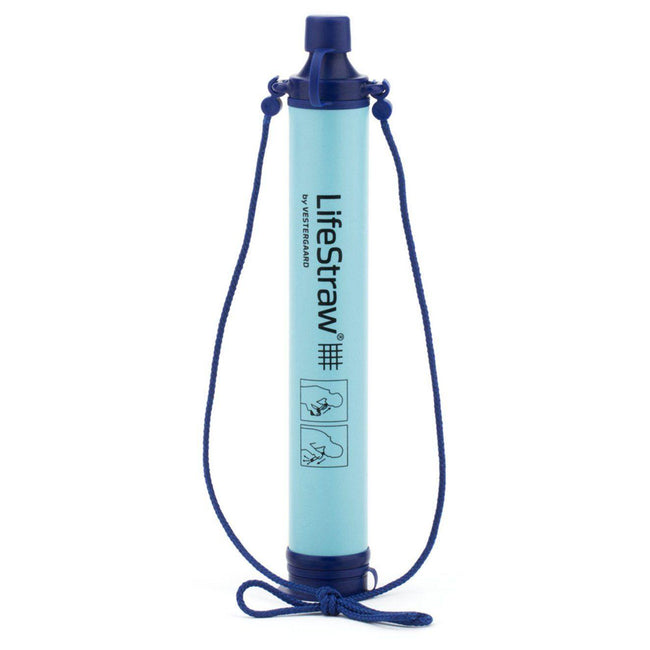
LifeStraw Personal Water Filter
LifeStraw
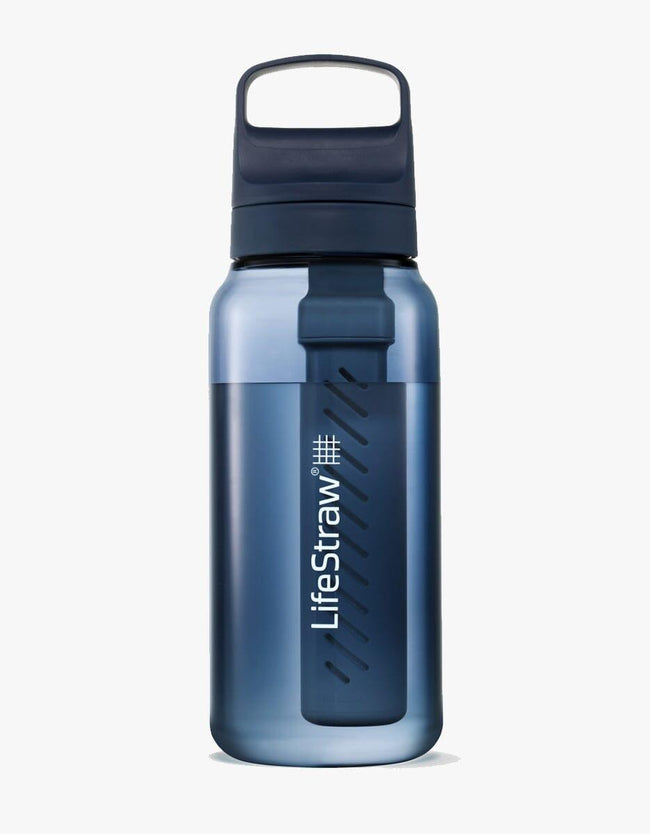
LifeStraw Go Series Water Filter Bottle 1 L
LifeStraw
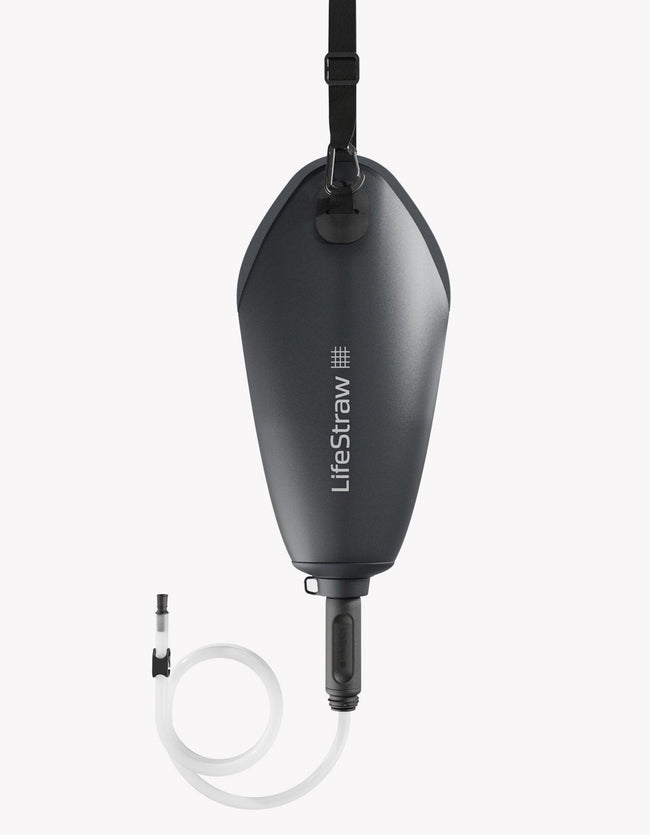
LifeStraw Peak Compact Gravity Filter 3 L
LifeStraw
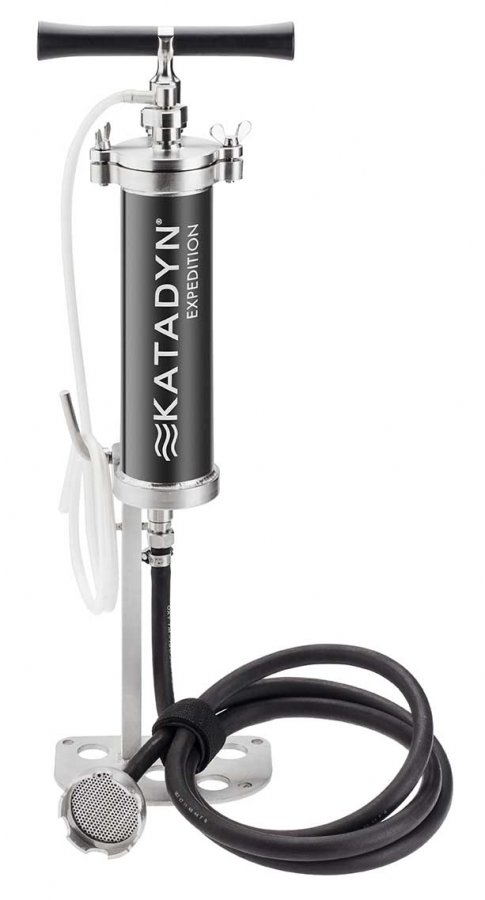
Katadyn Expedition Water Filter
Katadyn
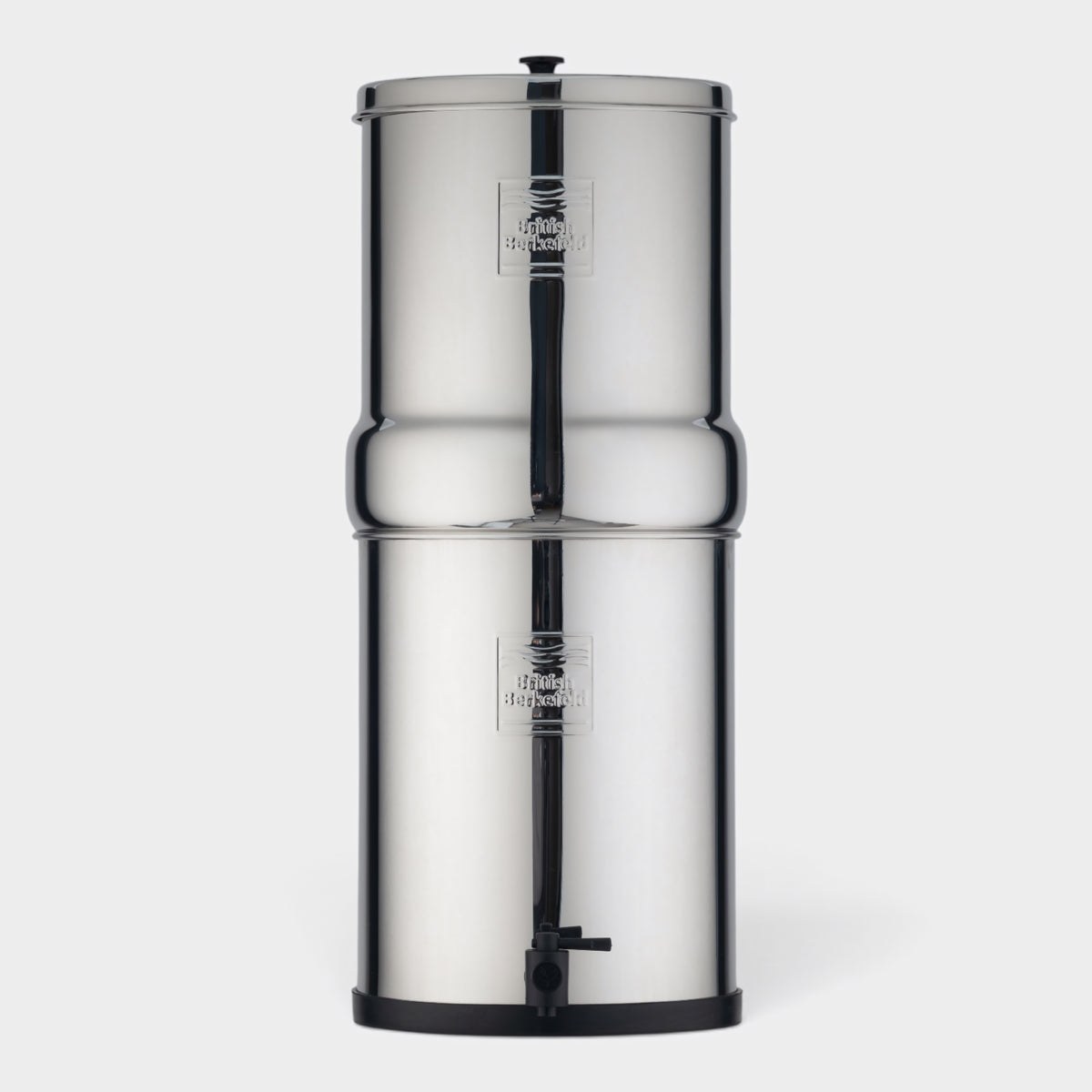
British Berkefeld Stainless Steel Gravity Filter 12 L
British Berkefeld
3. Ultrafiltration / Purifier
How it works: Covers advanced purifiers. Ultrafiltration uses very fine membranes (about 0.01 µm, e.g. Survivor Filter PRO); GRAYL purifiers instead use electroadsorption media, not a conventional ultrafiltration membrane.
Pros
- Potentially broader microbiological protection
- Portable options available
Cons
- Higher cost for some systems
- Cartridges need replacing
- Chemical limitations vary by product
Best for: Travel or emergencies where viruses may be present in freshwater.
Safety limitations: Virus claims must come from product-specific testing. None of these desalinate seawater.
Energy & dependencies: Usually manual (pressing or pumping).
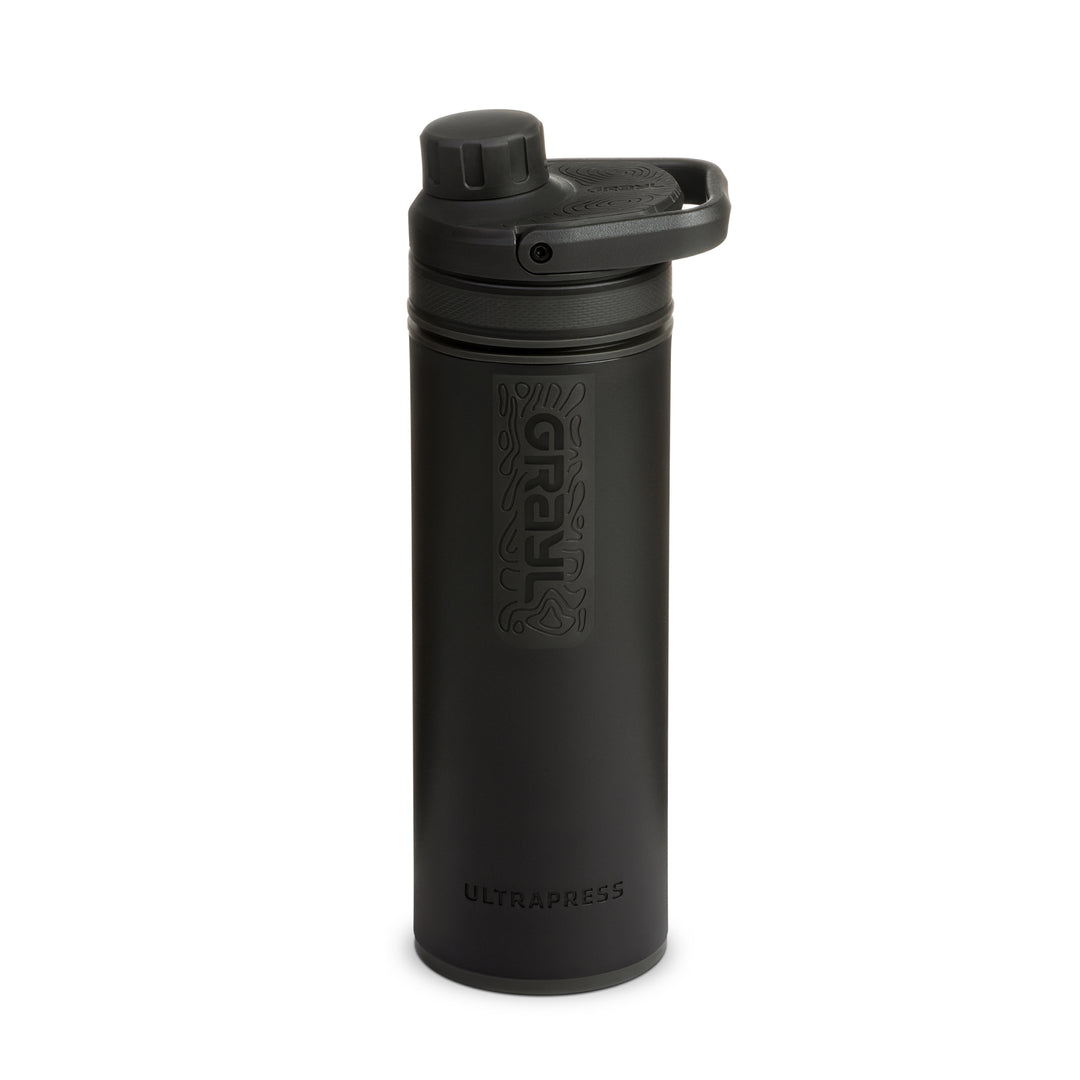
GRAYL UltraPress Purifier Bottle
GRAYL
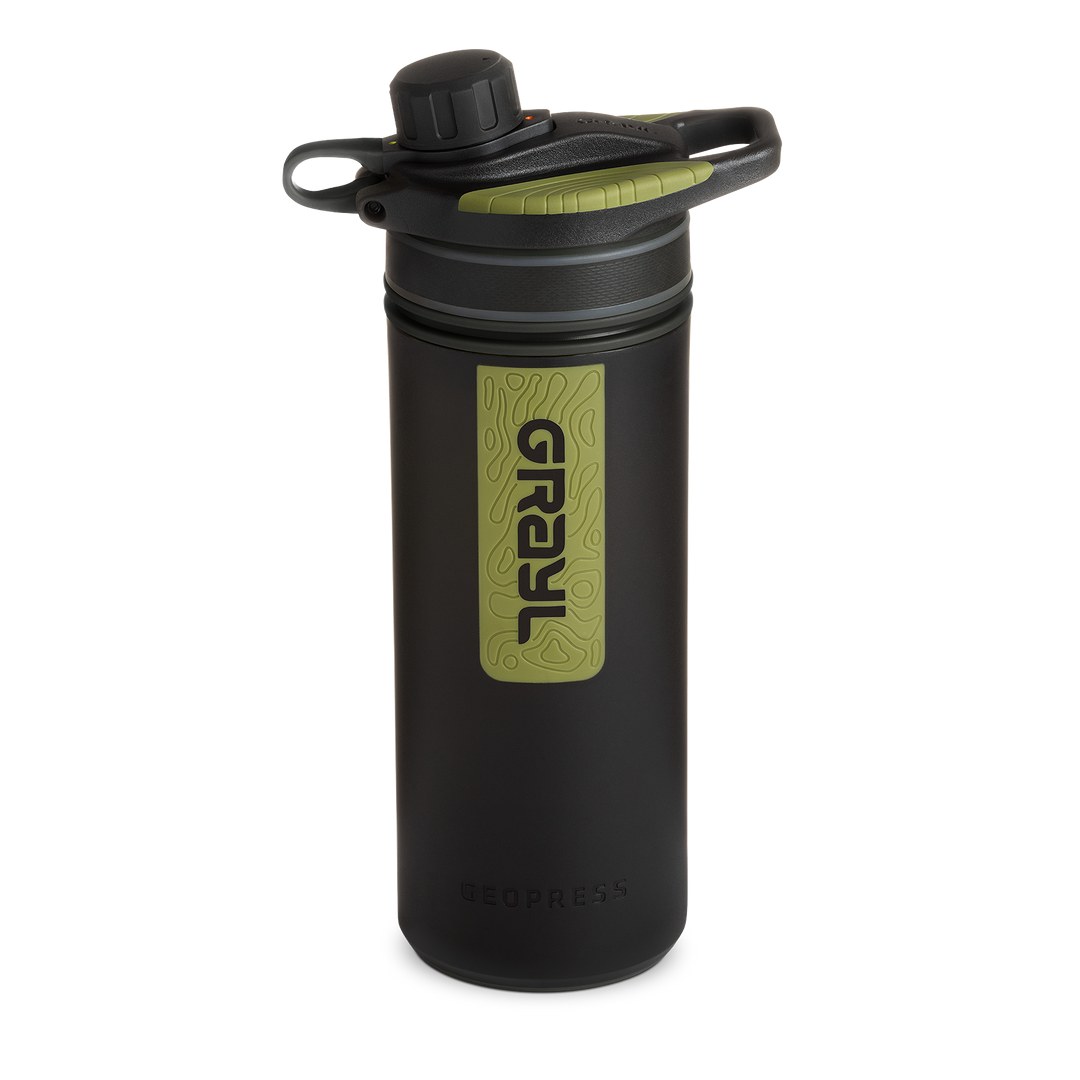
GRAYL GeoPress Purifier Bottle
GRAYL
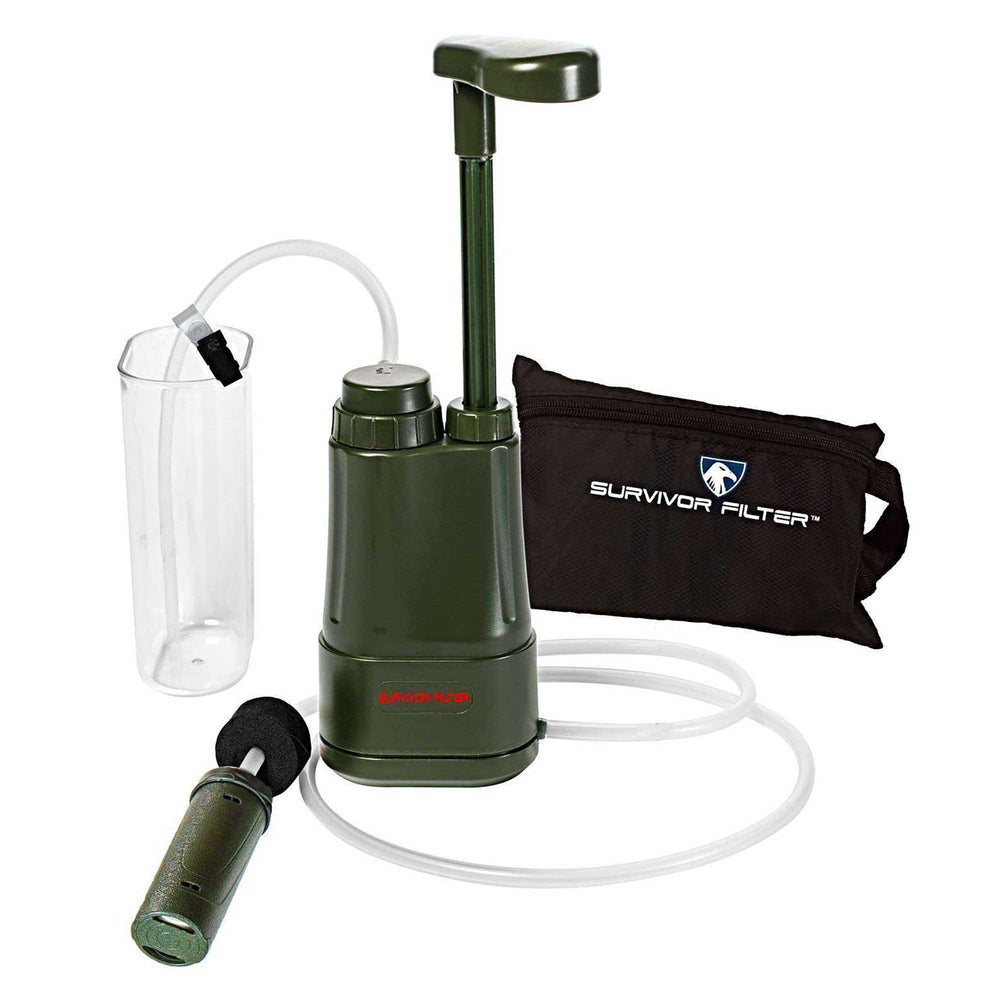
Survivor Filter PRO Water Filter Pump
Survivor Filter
4. Chemical Disinfection (Chlorine / Chlorine Dioxide / Iodine)
How it works: Chlorine, chlorine dioxide or iodine tablets disinfect water after the stated dose and contact (waiting) time.
Pros
- Compact
- Lightweight
- Useful backup treatment
Cons
- Waiting time before drinking
- Possible taste
- Chemical-specific limitations and contraindications
Best for: A light backup in every kit, or treating stored water of uncertain quality.
Safety limitations: Follow the product's own dose and time. Chlorine and iodine don't reliably inactivate Cryptosporidium; iodine is not for pregnant people or some thyroid conditions. Does not remove salt, metals or chemicals.
Energy & dependencies: None.
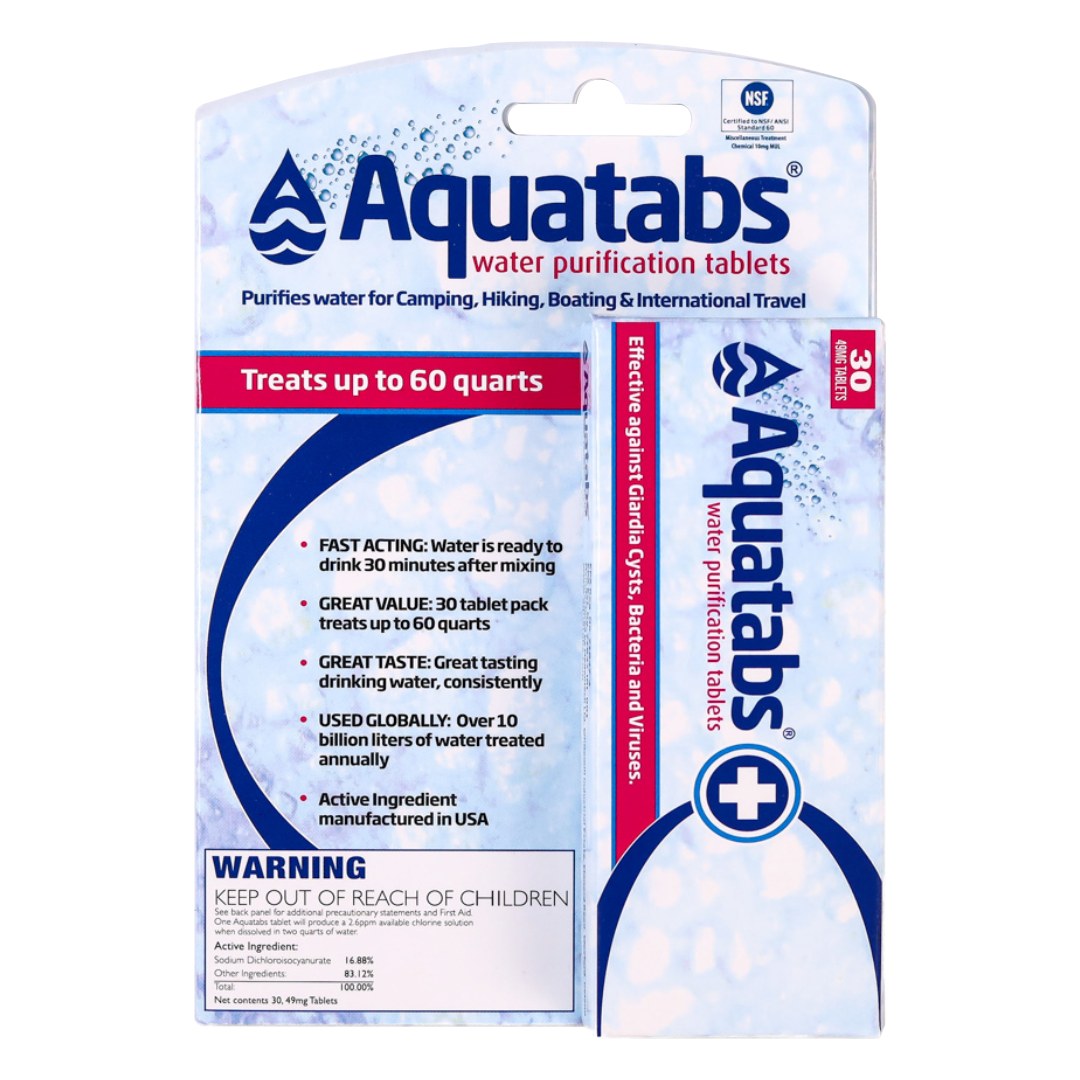
Aquatabs 49 mg Water Purification Tablets (30)
Aquatabs
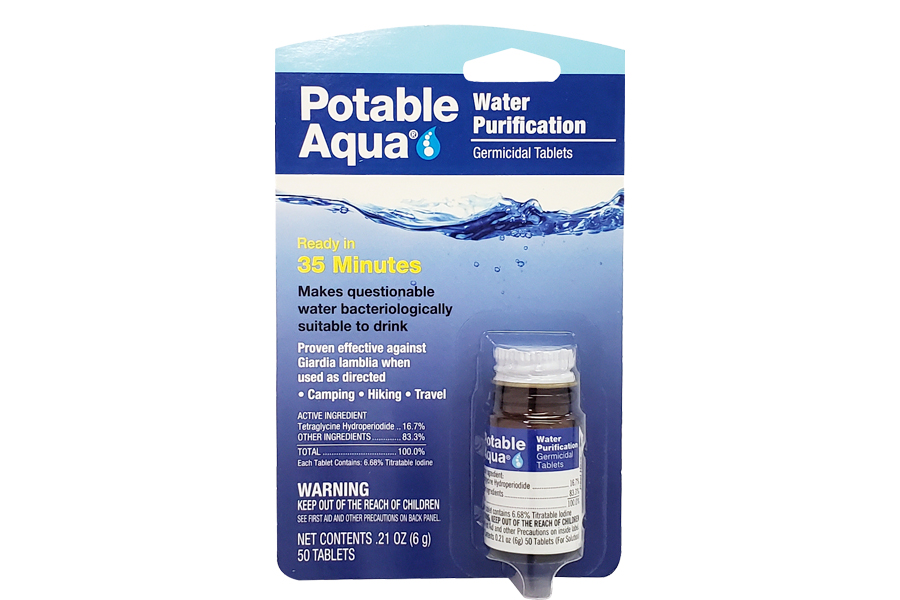
Potable Aqua Water Purification Tablets (50)
Potable Aqua
5. Household Bleach
How it works: Plain, unscented household bleach can disinfect clear water in an emergency, following official dosing instructions (e.g. EPA/CDC).
Pros
- May be available at home during an emergency
Cons
- Concentration varies between products
- Incorrect dosing is dangerous
- Limited effectiveness against some parasites
- Does not remove salt or chemicals
Best for: Emergencies only, when no designed treatment is available.
Safety limitations: Use only unscented bleach and authoritative emergency instructions.
Energy & dependencies: None.
Emergency use only — no product recommended.
6. UV Treatment
How it works: UV-C light inactivates microorganisms when clear water receives the correct exposure.
Pros
- No chemicals added
- Relatively fast treatment
Cons
- Battery or electricity dependency
- Cloudy water reduces effectiveness
- No residual protection after treatment
Best for: Clear freshwater while travelling, as a fast purifier.
Safety limitations: Pre-filter cloudy water. Does not remove chemicals or salt.
Energy & dependencies: Batteries or electricity.
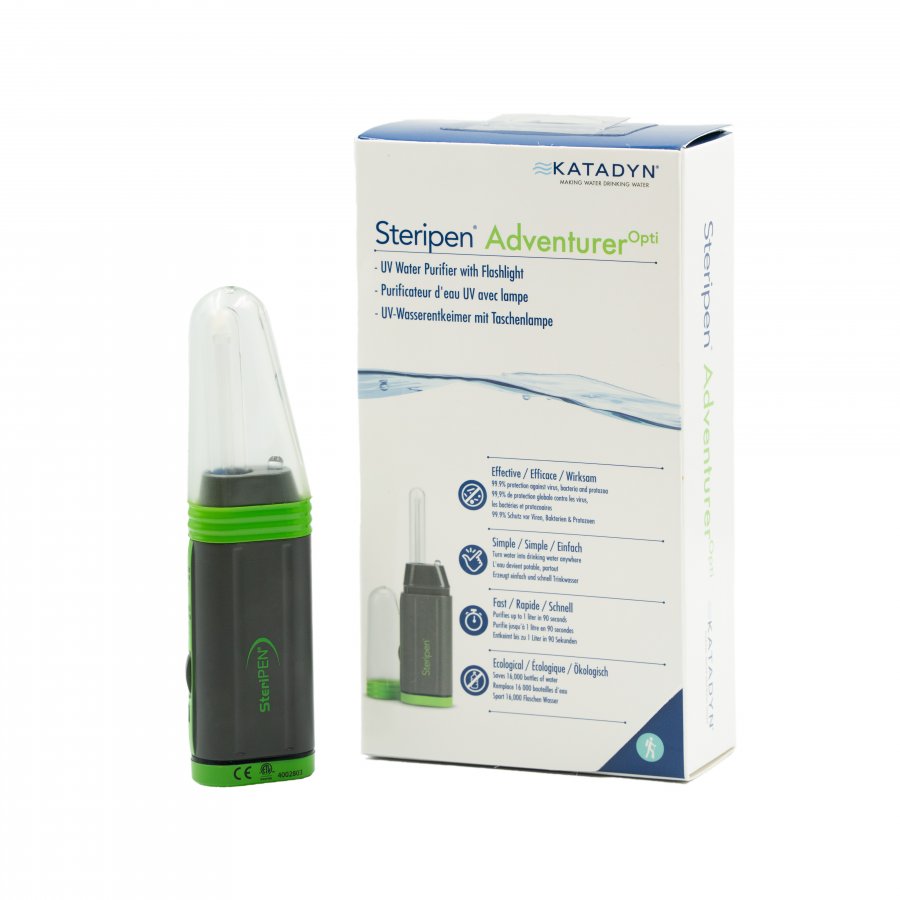
SteriPEN Adventurer Opti UV Purifier
SteriPEN
7. Reverse Osmosis (RO)
How it works: Pressure pushes water through a very fine membrane that rejects dissolved salts and many contaminants.
Pros
- Broad contaminant reduction potential
- Useful for suitable household treatment
Cons
- Needs water pressure and/or electricity
- Produces wastewater
- Membrane maintenance
- Not every household unit is approved for untreated rain or river water
Best for: Treating mains or well water at home under normal conditions.
Safety limitations: Requires compatible input water and correct operation.
Energy & dependencies: Mains water pressure and often electricity.
No recommended V1 product yet.
8. Distillation
How it works: Water is boiled and the steam condensed, leaving salts and many contaminants behind.
Pros
- Removes salt
- Can reduce many dissolved contaminants
Cons
- High energy consumption
- Often slow
- Not a guarantee against every chemical
Best for: Situations with plenty of heat or power and salty or mineral-heavy water.
Safety limitations: Some volatile chemicals can carry over unless the system controls them.
Energy & dependencies: Substantial heat or electricity.
No recommended V1 product yet.
9. Portable RO Desalination
How it works: A compact reverse-osmosis unit uses high pressure — manual or electric — to push seawater through a desalination membrane.
Pros
- Can produce freshwater from seawater
- Some manual models need no electricity
Cons
- Expensive
- Low output for compact manual models
- Maintenance and access to the sea required
Best for: Boats, life rafts and coastal emergencies.
Safety limitations: Ordinary freshwater filters cannot desalinate seawater. Avoid oil- or fuel-contaminated water.
Energy & dependencies: Manual pumping (physical effort) or electricity.
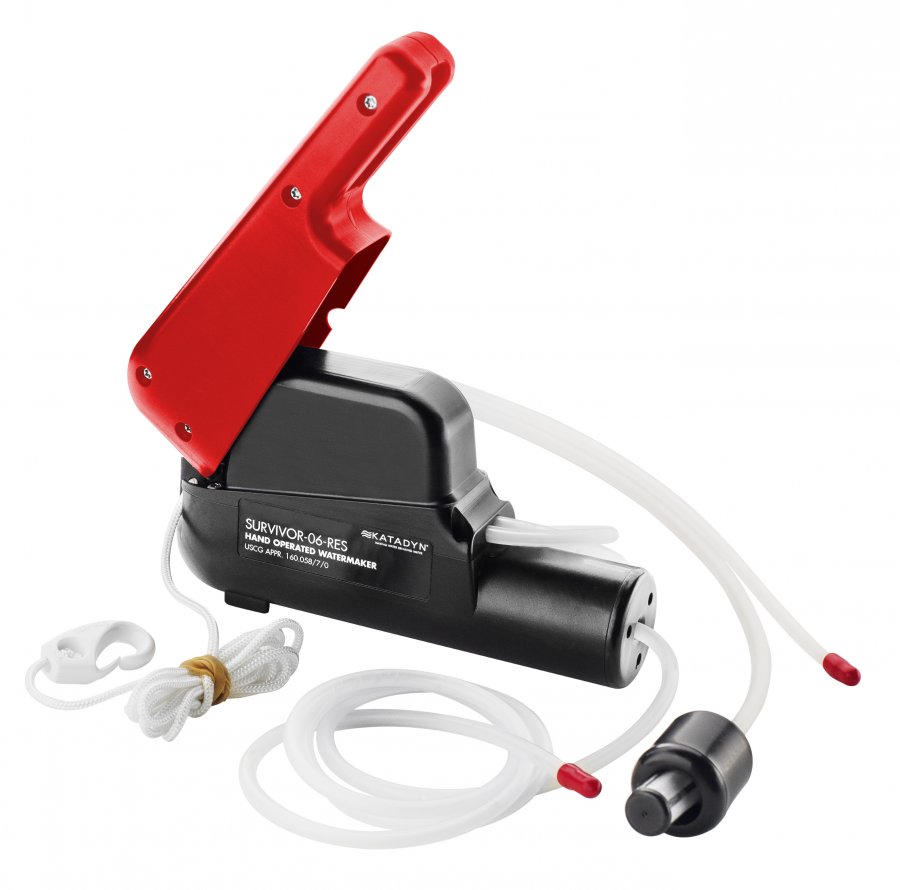
Katadyn Survivor 06-LS-RES Desalinator
Katadyn
10. Forward Osmosis (FO) / Emergency Hydration
How it works: A sealed pouch filled with a concentrated sugar/electrolyte solution sits in seawater or freshwater; water passes through the membrane on its own (forward osmosis) and slowly dilutes the concentrate into a drink. Reverse osmosis is different: it forces water through a membrane with high pressure and produces plain water.
Pros
- No electricity, pump or physical effort
- Light and compact
- Works in seawater or freshwater
Cons
- Single-use: each pouch is used once
- Small output (about 250 ml per pouch in seawater)
- Slow (6–8 h in seawater)
- Makes a sweet electrolyte drink, not plain water
Best for: Short-term backup hydration in a survival kit, boat or coastal emergency — not a household water system.
Safety limitations: OTS publishes no bacteria, virus, protozoa or chemical removal claims; only a 93% salt-rejection figure. Use only approved sources as the manufacturer instructs and avoid oil- or fuel-contaminated water.
Energy & dependencies: Passive osmotic process / no electricity.
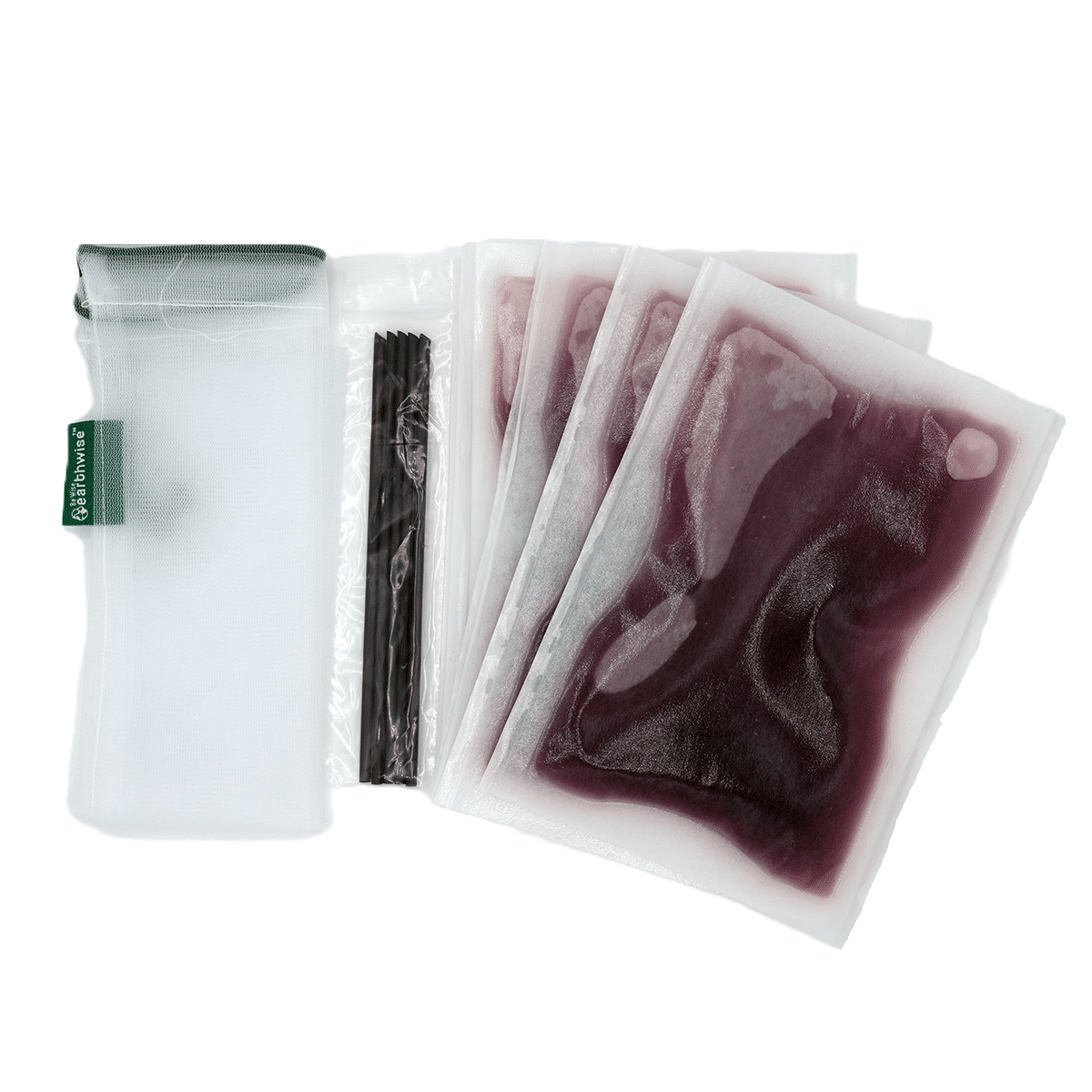
OTS Osmo Seal Desalination Filter (4-Pack)
OTS
Not a reusable purifier: four pouches give roughly 1 L of drink in seawater in total. Keep a stored potable water reserve as your base supply.
Our Recommended Water Preparedness Kits
Configure your household and the natural water sources you can reach to get a personalized BASIC KIT and ADVANCED KIT. Owning equipment does not create water: containers start empty, filters need a compatible source, and tablets and cartridges run out. Use the SURVIVOME simulator to add items yourself — nothing is added to your inventory automatically.
Your household
Natural water sources available
Natural water is never counted as stored drinking water.
No natural water source selected: filters and desalinators are omitted because they would have nothing to treat. Your stored bottled water is the reserve; Aquatabs need an appropriate water source and do not create water.
BASIC KIT — Recommended 7-Day Water Reserve
4 peopleWater storage target · 7 days
106.4 L
4 × 3.8 L × 7 days. A planning target, not a guaranteed survival duration.
ESSENTIAL
Bottled Drinking Water
- Qty
- 106.4 L
- Unit price
- Price unavailable
- Subtotal
- —
Commercially bottled potable water is the core of your reserve — it is ready to drink without any source or treatment.
Limitation: No verified bottled-water product in the catalogue yet: buy any sealed commercial bottled water and follow its best-before date.
ESSENTIAL BACKUP
Aquatabs 49 mg Water Purification Tablets (30)
Aquatabs
- Qty
- 1
- Unit price
- $11.99
- Subtotal
- $11.99
Compact emergency chemical water treatment backup.
Limitation: 1 tablet per 0.75–2 L, 30 min contact time; about 22.5 L per pack at the conservative dose. Not proven against Cryptosporidium; does not remove salt or chemicals. Needs a water source — it does not create water.
KNOWN SUBTOTAL: $11.99
Excludes products without an estimated price: Bottled Drinking Water.
This total does not include bottled drinking water.
Nothing is added to your inventory automatically: in the simulator, add the items yourself as simulated objects.
Test this kit in Survivome →ADVANCED KIT — Ideal 30-Day Water Preparedness
4 peopleWater storage target · 30 days
456 L
4 × 3.8 L × 30 days. A planning target, not a guaranteed survival duration. Storing 30 days of water needs substantial space and weight (about 1 kg per litre).
Builds on the BASIC KIT: same core items, recalculated for 30 days, plus source-dependent equipment.
ESSENTIAL
Bottled Drinking Water
- Qty
- 456 L
- Unit price
- Price unavailable
- Subtotal
- —
Commercially bottled potable water is the core of your reserve — it is ready to drink without any source or treatment.
Limitation: No verified bottled-water product in the catalogue yet: buy any sealed commercial bottled water and follow its best-before date.
ESSENTIAL BACKUP
Aquatabs 49 mg Water Purification Tablets (30)
Aquatabs
- Qty
- 1
- Unit price
- $11.99
- Subtotal
- $11.99
Compact emergency chemical water treatment backup.
Limitation: 1 tablet per 0.75–2 L, 30 min contact time; about 22.5 L per pack at the conservative dose. Not proven against Cryptosporidium; does not remove salt or chemicals. Needs a water source — it does not create water.
KNOWN SUBTOTAL: $11.99
Excludes products without an estimated price: Bottled Drinking Water.
This total does not include bottled drinking water.
Nothing is added to your inventory automatically: in the simulator, add the items yourself as simulated objects.
Test this kit in Survivome →Prices are estimates and may change. Check the retailer for current prices and availability.
Survivome is free — please use our affiliate links when purchasing. It’s the same price for you and helps us keep improving Survivome. As an Amazon Associate, we earn from qualifying purchases. Thank you!
Sources & References
- Ready.gov (FEMA) — Water (external link, opens in a new tab) ↗
- CDC — How to Make Water Safe in an Emergency (external link, opens in a new tab) ↗
- CDC — Water Treatment Options When Hiking, Camping or Traveling (external link, opens in a new tab) ↗
- EPA — Emergency Disinfection of Drinking Water (external link, opens in a new tab) ↗